
Last Updated on October 7, 2026 by Melanie Haynes
If you’re looking for a cute, furry companion and love dogs that are both regal and elegant, the Lhasa Apso breed could be just right for you. They look dignified and beautiful, but they also have a playful, puppy-like charm that’s hard to resist.
Lhasa Apsos are loyal, sensitive, and smart dogs. They’re also one of the oldest breeds, originally from Tibet, where they spent centuries guarding villages, Buddhist monasteries, and palaces. Their long, unique coats earned them the nickname “Little Lion Dog” in Tibet. Today, Lhasa Apsos are great family pets. They need regular grooming, but they also enjoy relaxing with their people.
Lhasa Apsos can be clingy sometimes, but they prefer attention on their own terms, making them a bit like cats in their independence. At Space Coast Pet Services, we love sharing helpful and fun facts about different breeds and all things pets. Read on to learn more about the Lhasa Apso.
The History of the Lhasa Apso Breed
The Lhasa Apso is an ancient breed from the Himalayan mountains of Tibet. For centuries, these dogs served as watchdogs, barking outside palaces and monasteries to alert villagers when someone unfamiliar was nearby.
They earned the nickname “Little Lion Dog” because they look like the mythical Snow Lion, another Tibetan guardian. While large Tibetan Mastiffs guarded the outside, the sharp bark of the Lhasa Apso was the final warning. This breed also has a sacred meaning.
Tibetan legend says that the souls of llamas temporarily enter these dogs after death, waiting for reincarnation. Because of their connection to Buddhist spirituality, Buddhist monks deeply admired them. People believed that keeping a Lhasa Apso brought good karma.
The Lhasa Apso played such a significant role in Tibetan culture that they were highly regarded as a national treasure. According to the American Kennel Club, “It was forbidden to buy or sell a Lhasa; they could only be given as gifts to those considered worthy to receive them.”
The Lhasa Apso arrived in England in 1901 and quickly became popular with dog lovers. The Kennel Club officially recognized the breed in 1908. However, because of confusion with Tibetan Terriers, these small but sturdy dogs were grouped together as “Lhasa Terriers.”
Because both breeds came from Tibetan monasteries, they were originally classified together. In 1934, they were separated and classified by size and type. People also sometimes confused them with the Chinese Shih Tzu. The Tibetan Breeds Association worked to tell the different Tibetan breeds apart.
As mentioned earlier, Lhasa Apsos were only given as gifts. Luckily, the Dalai Lama, the Buddhist spiritual leader, believed that an American named Charles Suydam Cutting deserved a Lhasa Apso. Both men shared a deep love of dogs.
Cutting and his wife sent the Dalai Lama some dogs—first Dalmatians, then a pair of Great Danes. In return, the Dalai Lama gave them two Lhasa Apsos, Taikoo and Dinkai. These dogs became the foundation of the breed in the United States. In 1935, the American Kennel Club “registered its first Lhasa Apso.”
At first, the breed was included in the terrier group. In 1959, the American Kennel Club moved the Lhasa Apso to the non-sporting group. Over the past twenty years, the breed has become more popular in the US and is now well known as a show dog.
Lhasa Apso Appearance
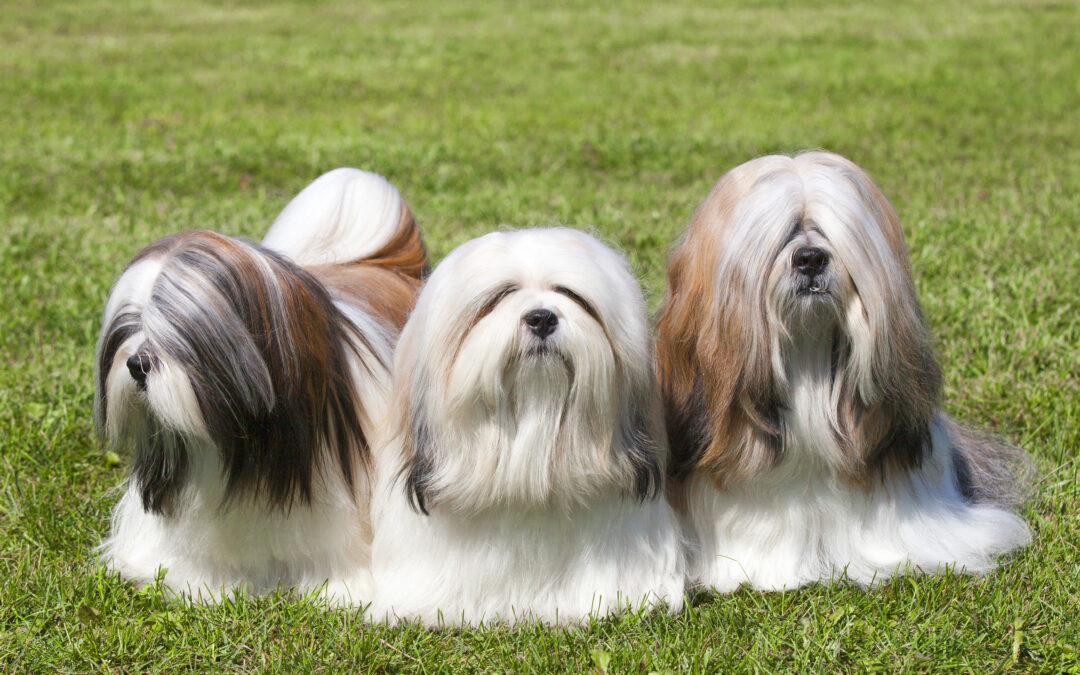
The Lhasa Apso is a small, compact dog with a long, straight double coat that’s parted down the middle. Their lion-like look includes a thick mane, and their floor-length coat forms a “bearded mane” around the head and neck. Lhasa Apsos come in several colors. The American Kennel Club allows eight standard colors for the breed:
- Red
- Black
- White
- Cream
- Grizzle
- Golden
- Red Gold
- Black and Tan
The breed standard is accepted at national and international dog shows. Other colors for Lhasa Apsos include blue, gray, liver, silver, and charcoal. These dogs have dark brown, almond-shaped eyes that peek through their long facial hair, giving them a sweet, thoughtful look.
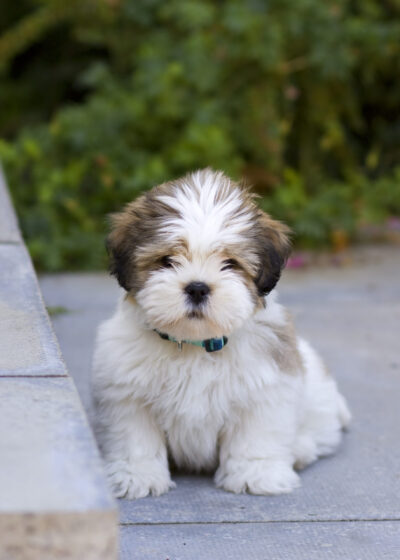
The Lhasa Apso’s heavily feathered tail curls over its back, adding to its proud, confident look. Their ears hang low. Because their thick coat keeps growing, many owners give their dogs a “puppy cut,” which makes them look like teddy bears.
A puppy cut is a more manageable, comfortable, and low-maintenance style that’s much easier to care for than their long-haired look, which needs regular grooming. With their unique and cheerful appearance, Lhasa Apsos are regal, charming, and unforgettable.
Lhasa Apso Breed Personality
Don’t let their small size and cuteness fool you—the Lhasa Apso has a big, confident personality. These furry friends take their watchdog role seriously. Thanks to their history as temple sentinels, they’re good at telling friends from strangers and can spot potential threats.
Because of their protective nature, Lhasa Apsos are often on high alert. They’re also sensitive to their owners’ emotions and respond with care and warmth. These dogs form strong bonds with their families and are loyal companions. Other notable traits include:
- Feisty
- Playful
- Devoted
- Confident
- Comforting
- Independent
The Lhasa Apso isn’t your typical lapdog and usually doesn’t want to be held all the time, but it pays close attention to its owner’s needs and can be very affectionate. These dogs are loving with their families but often distant with strangers. They aren’t as eager to please as some breeds and like to do things their own way.
Lhasa Apsos can get along with children and other pets, but they’re usually better for families with older, respectful kids rather than toddlers. They can live with other dogs or cats, especially if socialized early. Because they’re independent, Lhasa Apsos usually don’t have separation anxiety and are fine being alone.
Lhasa Apso Training
The American Kennel Club explains, “Lhasa Apsos are highly intelligent problem solvers with an independent nature.” The AKC suggests that sometimes the Lhasa Apso will manipulate their pet parents into “getting what they want.” Therefore, these dogs require reward-based training and consistent positive reinforcement to keep them motivated and engaged.
Lhasa Apsos don’t respond well to harsh discipline. They can act like teenagers, with an independent and stubborn streak that sometimes gets them into trouble. Training them takes patience and clear guidance, much like teaching a stubborn teen boundaries.
Lhasa Apsos need clear rules and steady leadership to avoid becoming rebellious. They respond well to treats, affection, and praise. Because they’re very smart, they can get bored easily, so it’s important to keep training creative and fun.
Early socialization is important because Lhasa Apsos can be wary of strangers. Puppy classes can help. House training may take longer because of their stubbornness, so patience is important. Even though they can be challenging to train, Lhasa Apsos are worth the effort.
Lhasa Apso Breed Health Concerns
Lhasa Apsos usually live long, healthy lives. Like all purebred dogs, though, they can have some inherited health issues. It’s important to buy a Lhasa Apso from a reputable breeder who can provide proper paperwork, like veterinary records and registration papers.
It’s also important to learn about the dog’s family history. Don’t buy from breeders who avoid genetic testing or don’t offer health guarantees. Stay away from sellers who care more about profit than the dogs’ well-being or who avoid answering important questions. Some health conditions Lhasa Apsos may develop include:
Eye Conditions
- Progressive retinal atrophy is an inherited eye disease that causes the retina at the back of the eye to deteriorate, gradually leading to blindness
- Cataracts occur when the lens of the eye becomes cloudy, preventing light from reaching the retina. It can cause compromised vision or blindness
- Glaucoma is caused by a buildup of fluid in the eye due to increased pressure in the eye, due to improper drainage
- Keratoconjunctivitis is essentially dry eye, a chronic condition in which inadequate tear production causes inflammation, painful red eyes, and excessive discharge
Patellar Luxation
Patellar Luxation in dogs is a common orthopedic condition in which the kneecap moves out of its normal position or dislocates when the knee is flexed. If left untreated, it can lead to chronic arthritis and severe pain. Some dogs will demonstrate this condition by running on three legs when the knee is out of place. If the condition is severe enough, surgery is typically recommended.
Brachycephalic Airway Syndrome
Lhasa Apsos are a brachycephalic breed, which means they have a short snout, flat face, and a “smushed in” nose. Their compressed airways can make breathing harder. These dogs often pant during exercise and may snore. Keeping them at a healthy weight and avoiding heavy activity in hot, humid weather can help prevent breathing problems and heatstroke.
Dental Disease
Plaque and tartar buildup on teeth and gums can cause gingivitis, but the good news is that gingivitis is treatable if caught early. If left untreated, periodontal disease can damage teeth and gums and allow bacteria to enter the bloodstream, affecting major organs like the kidneys, heart, liver, and brain.
Brushing your dog’s teeth regularly is important for healthy teeth and gums. Brachycephalic breeds like the Lhasa Apso can be harder to brush because of crowded teeth and underbites, but it’s still important to prevent gum disease and other problems. Dental chews can also help reduce plaque and tartar and freshen your dog’s breath.
Why Regular Vet Visits Are Crucial
When you bring a new furry friend into your family, regular vet visits are important for keeping them healthy. Wellness exams can catch and treat illnesses early, and sometimes even save your pet’s life. Adult dogs should see the vet at least once a year.
Puppies should visit the vet about once a month to stay up to date on vaccinations, and older dogs should go every six months. Since Lhasa Apsos can have breed-specific health issues, regular vet visits are important for early detection, treatment, and prevention.
Grooming for the Gorgeous Lhasa Apso Breed
Lhasa Apsos need regular grooming because of their long, thick double coat. Pay extra attention to spots that get tangled easily, like the underbelly, chest, legs, and around the paws. The American Kennel Club recommends “Daily grooming with a pin brush, wide-toothed comb, and conditioning spray.” These tools help keep their coat free of mats and tangles.
Many Lhasa Apso owners like to keep their dog’s hair short with a teddy-bear cut, which means trimming the body short but leaving the head, face, and ears full and rounded. If you prefer their natural long hair, make sure to brush their thick coat in layers.
Start by dividing the hair into small sections and spraying each with detangler. Lift the topcoat to reach the undercoat, working on the layer closest to the skin. Begin at the bottom of your Lhasa Apso’s body and brush upward toward the head. Part their hair down the middle to keep their classic look.
Grooming a Lhasa Apso’s hair can be a lot of work, but having such a beautiful, fluffy pet is worth it. You can also get creative with their style. Whether you choose a show-dog look or a practical “teddy trim,” Lhasa Apsos don’t shed much and have lots of personality.

We LOVE the Lhasa Apso Breed!
The Lhasa Apso is an ancient, charming, long-haired breed from Tibet. They’re called “Little Lion Dog” because they look like a Snow Lion and have a long, thick double coat. They were originally bred as watchdogs, and their sharp barks were the final warning when strangers came near Tibetan monasteries and palaces.
Lhasa Apsos can be tough to groom because of their long, thick coat, but they’re worth the effort. They’re known for being stubborn, but they’re also very loving and affectionate in their own way. If you want a small dog that’s not a typical lapdog but can form a strong bond with you, the Lhasa Apso could be a great choice.
If you need a dog walker, you can book with Space Coast Pet Services, Viera’s top dog walkers. We also offer pet-sitting and family-style boarding. Your pet will get a safe, comfortable environment and personalized care in a relaxed setting.
We include playtime, exercise, and snuggles. If your pet needs extra pampering, we’re happy to give them the TLC they deserve. We’re dedicated to caring for your furry friend.

As an Amazon Associate, I earn from qualifying purchases. This small amount allows me to bring you helpful resources that I use or researched and recommend.
- Pet-Friendly Halloween Events in Viera and Brevard County (2026) - October 6, 2026
- Whippet Dog Breed Guide: History, Exercise and Health - September 14, 2026
- Donating a Pacemaker to a Dog in Need: How Pet Lovers in Viera, Florida Can Make a Lasting Impact - August 17, 2026


Recent Comments