
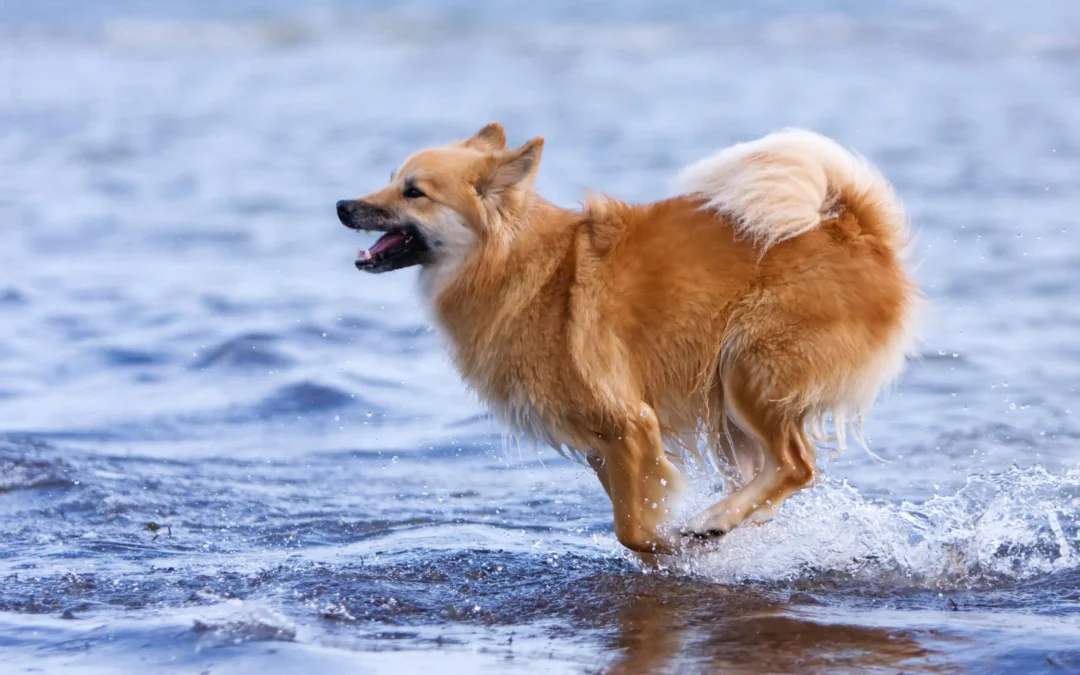
If you want a loving, loyal dog with an interesting background and a cheerful personality, the Icelandic Sheepdog is a great choice.
The Icelandic Sheepdog is the only dog breed native to Iceland. Thanks to their background as hardworking herders, they are smart and naturally enjoy having a job or task. These Nordic Spitz-type dogs have cute, fox-like faces and a playful smile that is hard to resist. Viking settlers brought them to Iceland around 874 AD, and they have a long history as hardworking, eager dogs.
The Icelandic Sheepdog is a very loyal family dog and is sometimes called “The Vikings’ Dog.” They are energetic, lively, and always ready for new adventures, making them a great fit for active families. These loving dogs are smaller than most herding breeds but have big personalities. Our goal is to help you learn about different breeds and all things pets. Keep reading to learn more about the smart, social Icelandic Sheepdog.
Icelandic Sheepdog History
Vikings brought the Icelandic Sheepdog to Iceland more than 1,000 years ago. As Iceland’s only native breed, they helped herd and protect animals like sheep, horses, and cattle. These dogs are tough and can handle harsh weather and rough ground. Their thick double coat helps them move through tough landscapes, cross rivers, and climb rocky hills.
This breed was important for farm work but also became popular with the upper class, especially women and priests, who kept them as pets. The Icelandic Sheepdog became so well known that it was even mentioned in William Shakespeare’s play, “Henry VIII.”
The first Icelandic Sheepdog show was held in 1897 at Tivoli Gardens in Copenhagen, Denmark, where three dogs were shown. The first dog show in Iceland to feature the breed was organized by the Icelandic Kennel Club in 1973.
Sadly, the breed nearly disappeared in the early 1900s due to several pandemics. In the 1950s, Mark Watson and local breeders worked hard to save the Icelandic Sheepdog by finding the remaining purebred dogs and starting breeding programs.
Watson also sent some of these dogs to California to help save the breed. Although the Icelandic Sheepdog is still rare, it is no longer at risk of extinction. Today, the breed is protected by the Icelandic Dog Breeder Association and is recognized by the American Kennel Club, which added it to the Herding Group in 2010.
Icelandic Sheepdog Appearance
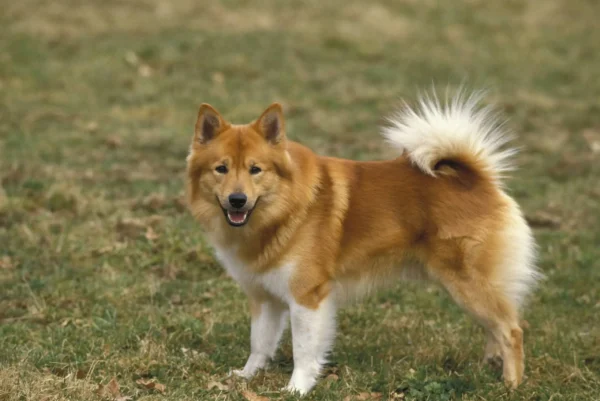
The Icelandic Sheepdog is a sturdy, slightly smaller-than-medium-sized dog with a deep chest and muscular, compact build. They have a gentle, happy, and alert look, with a face that resembles a fox’s. These dogs often seem to be smiling. Their thick double coat can be long or short and comes in several colors, always with their signature white markings:
- Tan
- Grey
- Black
- Cream
- Chocolate
- Reddish-brown
These dogs can also have pied markings, which are patches of color on a white background. Some have a tricolor coat with black, white, and tan on their legs, cheeks, and above the eyes, plus small white socks on their paws. Some even have a black mask, making them look like playful little bandits.
Icelandic Sheepdogs have bushy tails that curl over their backs. Their ears stand up and look like a fox’s, matching their strong, triangle-shaped heads. Their almond-shaped eyes give them a smart look, and their short muzzle adds to their fox-like face. They share many traits with other Nordic Spitz-type breeds.
Icelandic Sheepdog Personality
The Icelandic Sheepdog is usually eager to please and cheerful, with a great personality. According to the American Kennel Club, the Icelandic Sheepdog is a “charmingly friendly and faithful all-around herder.” They make good family dogs and usually get along well with kids and other pets.
These dogs are affectionate, curious, smart, and quick to learn. Their friendly nature makes them easy to love, and they often form strong bonds with their families. They need lots of human contact, so they may not do well if kept in a kennel.
The Icelandic Sheepdog is known for sticking close to their people and can get separation anxiety if left alone too long. They may become sad, stressed, or bored without company. These energetic dogs need regular exercise, so they are best for active families. Because of their herding background, they can also be quite vocal and may bark when excited.
Icelandic Sheepdog Grooming
The Icelandic Sheepdog stands out for its thick double coat, which can be short or long. Since the breed sheds seasonally, consistent grooming is a must. Brush your furry friend at least once a week to control matting. How to groom your Icelandic Sheepdog:
- Mist the coat lightly with a grooming, detangling spray or conditioner to lubricate the fur, prevent breakage, and reduce static and friction before brushing
- Brush short-coated coats 2 to 3 times a week and long-haired coats 3 to 4 times a week using a slicker brush or metal comb to manage shedding
- Practice line brushing by gently working from the skin outward in sections to smooth out sneakily hidden knots and mats, especially around the feathered areas, such as the ears, legs, and tail
- Switch to daily brushing and grooming during the heavier shedding seasons of spring and fall
- Never shave them, as it ruins their natural double coat, which acts as an insulator that protects them from the cold in winter and keeps them cool in summer. Shaving them can also severely damage their coat.
Avoid frequent baths to prevent their weather-proof coat from drying out. Due to their thick, dense undercoat, skin issues such as irritation, hot spots, or matting can be easily concealed under the outer layer. Regular skin checks help to maintain your dog’s skin health. While grooming, lift the fur to inspect the skin for dandruff, redness, or parasites.
Icelandic Sheepdog Training
The Icelandic Sheepdog is very smart, eager to please, and quick to learn. Train them using positive reinforcement, as they are sensitive to harsh voices or corrections, which can make them scared or discouraged. Give your dog treats, toys, and praise instead of strict discipline.
Patience and consistency are important when training an Icelandic Sheepdog. Focus on teaching obedience and managing their barking. Leash training is a must because of their strong herding instincts and desire to guide people or animals. Keep their minds busy to prevent boredom and help them develop good problem-solving skills.
Icelandic Sheepdog Health Issues
Like all dogs, the Icelandic Sheepdog can have some health issues. They are usually healthy and hardy, but there are a few conditions to watch for:
- Hip dysplasia is an inherited condition where the hip’s ball-and-socket joint grows abnormally and becomes loose, causing pain, stiffness, and potential arthritis
- Patellar Luxation is a condition where the kneecap slips out of its normal position, creating awkward or abnormal movement
- Eye conditions such as cataracts and retinal dysplasia, which can lead to a significant loss of vision
- Cryptorchidism is a developmental condition where one or both testicles fail to descend to the scrotum
- Obesity is a major risk for the breed, which can affect the joints and damage heart health
- Dental issues, such as gingivitis or periodontal disease from plaque, tartar, and bacteria in the mouth, can travel from the mouth into the bloodstream and enter the major organs, such as the heart, kidneys, or liver
With good care, the Icelandic Sheepdog usually lives 12 to 15 years. Regular vet visits are important, as catching health problems early helps keep your dog healthy and happy.
Like any pet, Icelandic Sheepdogs need good dental care, since they are more likely than average to get dental disease. Make sure to keep up with their vaccinations, preventive care, and yearly checkups.
Regular vet visits help you keep track of your pet’s health. They also let you talk with your vet about things like parasite control, dental care, behavior changes, and nutrition, so you can make a plan that fits your dog’s needs.
According to the Animal Humane Society, “Fleas and ticks not only cause skin irritation, but can also transmit other parasites, like tapeworms, cause anemia in puppies and kittens, and infest your home.” Taking preventive care steps can also lower long-term vet costs, helping you keep your pet happy and healthy for years to come.
These Faithful Little Fox-Faced Herders Will Steal Your Heart
The Icelandic Sheepdog is a loving, playful, and family-friendly dog with a long history as a Viking helper and farm herder. Keep in mind, though, that these sweet dogs can get separation anxiety and need lots of time with their people.
These energetic dogs need daily exercise, so they are great for active families. The Icelandic Sheepdog looks a bit like a fox and always seems cheerful and friendly. If you bring one home, you’ll have a loving companion and lots of happy moments together.
If you need a dog walker, Space Coast Pet Services is Viera’s top choice for dog walking and pet sitting. Visit our booking page and check out the Drop-in Home Pet Visit section for professional care from licensed, insured, and CPR-certified pet sitters.
We tailor each visit to your pet’s needs and ensure your dog gets plenty of love and attention. As true animal lovers, we take caring for your pet seriously. It’s our job and our pleasure to help your furry friend feel safe and comfortable.
We’d love to hear what you enjoy most about having an Icelandic Sheepdog!

As an Amazon Associate, I earn from qualifying purchases. This small amount allows me to bring you helpful resources that I use or researched and recommend.
- Icelandic Sheepdog Breed Guide: History, Care and Traits - November 9, 2026
- Holiday Pet Sitting in Viera: From Orlando Day Trips to Week-Long Getaways - October 13, 2026
- Pet-Friendly Halloween Events in Viera and Brevard County (2026) - October 6, 2026

Recent Comments