
Last Updated on January 15, 2026 by Melanie Haynes
Are you looking for a striking feline with a cuddly personality that may be more tolerable for pet parents with allergies? The Korat cat breed is a rare and captivating companion, long regarded as a symbol of good luck, prosperity, and positive energy.
Rooted in Thai history and tradition, Korat cats were once gifted to brides on their wedding day to bring happiness, financial success, and lifelong blessings. Their physical traits are deeply tied to ancient folklore, with each feature carrying a symbolic meaning tied to fortune and longevity.
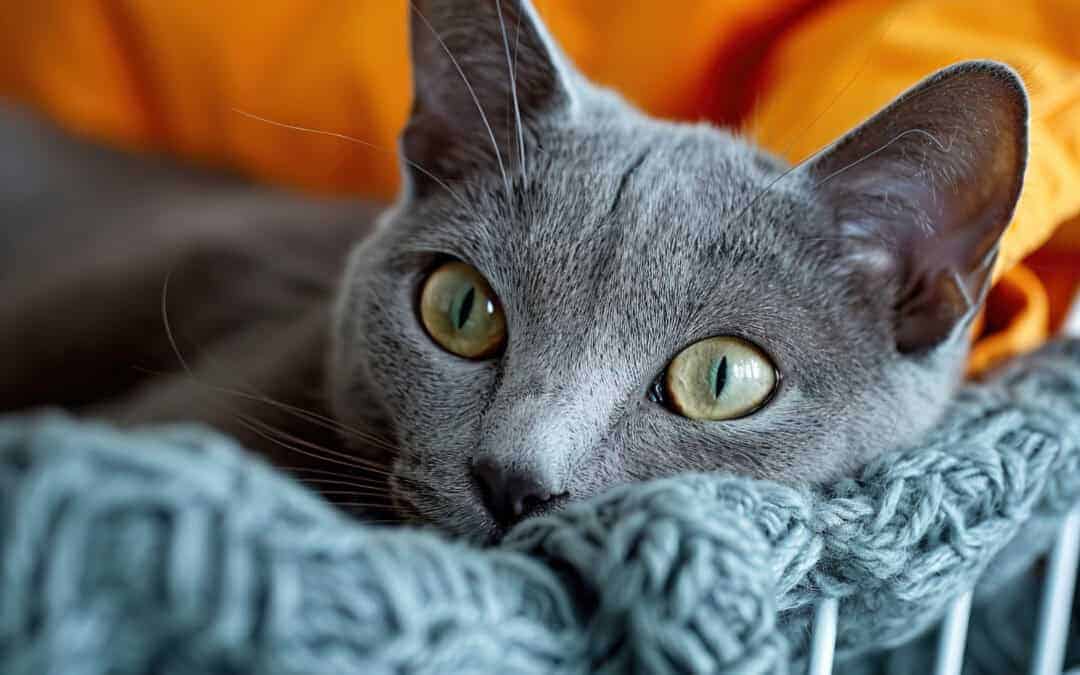
Beyond their legendary status, Korats are admired for their elegant silvery blue coats, expressive green eyes, and devoted nature. While they are sometimes compared to Russian Blue cats, the Korat stands in a category all its own, both in appearance and temperament.
At Space Coast Pet Services, we are passionate about educating pet parents on unique cat breeds and responsible care. Continue reading to learn more about the Korat cat breed, including their history, personality, and care needs.
History of the Korat Cat Breed
The Korat breed holds great historical significance and is deeply connected to Thai culture. These cats were first discovered in Thailand’s largest province, Nakhon Ratchasima, also known as Korat. It is a city recognized for its rich and vibrant cultural heritage.
The Korat is one of the oldest breeds. They are described in the ancient manuscript The Cat-Book Poems, written during the Ayudhya period. It dates back from 1350 to 1767. The book features several Thai cat breeds considered to be “good luck.”
It is due to the breed’s long-held standing as a prosperous omen that these cats were rarely purchased. The Korat was sacred in Thailand, and their reputation as good luck charms is centuries old and widely documented.
Despite their popularity, this exceptional breed did not arrive in America until 1959. The first Korat cats to come to the United States were a sister-and-brother pair named Nara and Darra. They were imported from a breeder in Bangkok to the US for breeding purposes.
The cats were received by cat enthusiast Jean Johnson, who outcrossed them with her blue-point Siamese cats. She removed those furry felines with any Siamese characteristics from the breeding pool to develop the purebred Korat cat.
The major cat associations that acknowledge the Korat as a breed standard:
- The Cat Fancier’s Association
- The International Cat Association
- The Federation International Feline
- The Governing Council of the Cat Fancy
In 1965, the Korat Cat Fanciers Association was established, and by 1966, the CFA accepted these silvery blue beauties for championship competition. The Korat first competed for honors at a cat show in King of Prussia, Pennsylvania.
The first Korat cat grand champion winner in CFA was GC Jalna’a Ming Ti of Chu’n Ch’i. The breed has remained rare in America due to its small gene pool and is typically found only in Thailand.

Korat Cat Appearance and Physical Traits
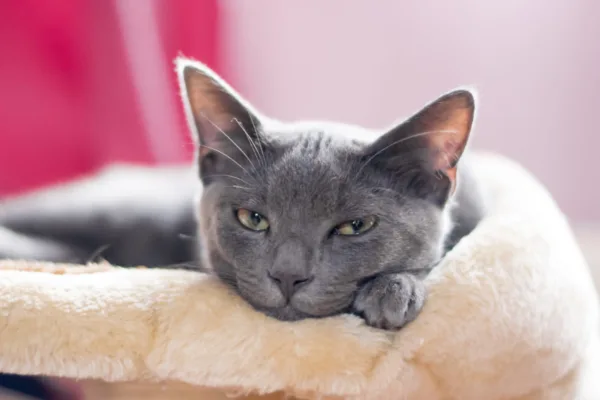
The Korat is known for its shimmering silvery-blue coat, compact size, and heart-shaped head. These cats boast large, expressive eyes, which range in color from a radiant shade of peridot-green to a bright, vivid emerald. The Korat is muscular and athletic, and is sometimes described as “cobby.”
“Cobby” typically refers to a short, broad, and stocky build in cats. The Korat is often compared to the Russian Blue. Both breeds possess a rare and regal beauty. However, the Russian Blue tends to have a wedge-shaped head and a more delicate and slender appearance.
The Russian Blue has differently shaped eyes compared to the Korat. The Russian Blue has eyes that are closer to an almond shape, while the Korat’s eyes are larger. In Thailand, they are revered for their sparkling apple-green eyes, “the color of young rice.”
The description is found in ancient Thai literature. The color symbolizes a bountiful and generous harvest. The Korat cat’s unique appearance is often associated with good luck and promising karma. Some other common names for the Korat cat include:
- Malet
- Si Sawat
- Thai Blue
- Thai Lilac
- Blue Siamese
- Thai Blue Point
- Thai Lilac Point
These fine furry felines have large, round ears that flare upwards. The Korat cat’s ears are distinctly different from the Russian Blue’s, as the Russian Blue’s ears are much pointier. The Korat’s fur is also a deeper shade of silvery-bluish grey.
The Korat cat is sometimes referred to as “the cat with five hearts.” Their large eyes and frontal facial structure create the appearance of a traditional Valentine’s heart-shaped face. The top of the head forms a second heart outline. The nose has a characteristic heart shape, completing the heart design on its head. In a sitting position, the Korat’s chest displays a fourth heart shape.
The fifth heart is the one that beats inside their chest and generates love, which they express by emitting healing vibrations and adorably heartwarming purrs.
Grooming and Coat Care for Korat Cats
The Korat cat requires minimal grooming, but should still be brushed at least once a week. These furry felines are relatively low-maintenance, as their shiny coats need only a soft brushing. These cats sport short, single coats and lack a thick undercoat, shedding less than other breeds.
Unlike other cats, the Korat does not shed excessively, and its hair is not susceptible to pesky knots or tangles. Use a brush that is gentle on their delicate skin yet efficient at removing loose hair.
A soft rubber or silicone brush is ideal for these cats. These brushes provide a massaging sensation that feels soothing to kitty without tugging the roots of their fur. Avoid slicker brushes or de-shedding tools that are harsher on the skin.
The Korat cat has an easy-to-manage coat with little matted fur. With the right tools, the grooming experience should be pleasant for them. Weekly brushing also promotes bonding with your feline companion.
Korat Cat Health and Genetic Considerations
Although the Korat cat is generally a healthy breed, they can be prone to certain health conditions. The average lifespan of the Korat is 10 to 15 years! Some Korat cats can live even longer if they are properly cared for. Some of the health issues a Korat may experience:
- Obesity
- Diabetes
- Heart disease
- Dental disease
- Kidney disease
- Respiratory issues
- Gangliosidosis (GM1 and GM2)
Understanding Gangliosidosis in Korat Cats
Gangliosidosis is a genetic disorder that progressively damages nerve cells in the brain and spinal cord. It is a rare but fatal illness, which is why Korat cat breeders must be mindful of the disorder and test for both mutations (GM1 and GM2).
Testing is vital for breeders to prevent the illness from being passed on to future generations. It is the most effective method to reduce the prevalence of gangliosidosis in the Korat breed. Genetic testing minimizes the risk of disorders and is part of responsible breeding practices.
The Korat breed is susceptible to dental diseases that are common in most furry felines, which is why regular dental care is essential for cats of all breeds. Due to their short coats, Korat cats may be more sensitive to the cold and, as a result, may develop respiratory illnesses.
Preventive Veterinary Care and Testing
Annual vet visits are also crucial for protecting your Korat kitty’s health and identifying potential health conditions before they become more challenging to treat. However, older cats should visit the vet twice a year to detect age-related illnesses, such as diabetes or heart disease, early on.
Exercise and Enrichment Needs of Korat Cats
Exercise is beneficial and necessary for any breed to maintain good health and prevent obesity. Ideally, your Korat cat should engage in 20 to 30 minutes of exercise daily, which can be broken into several short bursts of play.
Cats enjoy toys that mimic the hunt. They love the strategic and artful execution of the chase, the thrill of the catch, and ultimately the satisfaction of the kill bite. The Korat cat is a spirited and energetic breed. Cat wands, toy mice, and interactive games are fun for these frisky felines.
Cat trees also provide enrichment and a place to climb, jump, and look down to survey their kingdom. Playtime is also another opportunity for the animal companion and pet parent to strengthen their bond.
Korat Cat Temperament and Personality
The Korat cat craves companionship and prefers the company of their pet parents and families. It is not wise to leave them alone for long periods since they can suffer from separation anxiety. They enjoy cozying up to and cuddling with their favorite human. These fabulous felines make good family pets and form enduring bonds with their people.
Korats can also get along well with other pets in the home as long as they are properly socialized. However, they can sometimes literally turn into adorable little green-eyed monsters when they feel neglected or if their human affection is compromised.
The best way to ensure each of your pets receives the attention they deserve is to provide adequate, equal resources for each animal. These cats are also playful and relish social interaction, but some are like furry little kids and do not enjoy sharing their toys with others. An overview of their positive traits:
- Loyal
- Gentle
- Playful
- Curious
- Expressive
- Affectionate
Korats can also be very “Chatty Cathies” and can’t wait to tell you all about their day when you come home. Although not as talkative as Siamese cats, Korat cats are effective and enthusiastic communicators and never shy away from sharing their opinions.
If you appreciate outgoing cats, they can be quite entertaining. However, they may be a bit skittish around strangers. Korats tend to seek reassurance from their humans when they feel their home is occupied by unfamiliar people.
Training and Mental Stimulation for Intelligent Cats
Korat cats are brilliant and often respond well to training. These fast learners tend to excel right to the top of the class. Teaching them to walk on a leash is typically easy-peasy. Like any other cat, the process involves the proven method of positive reinforcement.
Clicker training is a reward-based training method in which you utilize a device called a clicker to let the cat know that they performed a desired behavior. When you click the device, you give your furry feline a tasty teat. Korat cats enjoy mental stimulation, making clicker training an ideal activity for them.
Is the Korat Cat Right for Your Home in Viera?
The Korat is not just any cat. They are revered in Thailand and represent good luck, prosperity, and positive karma. For centuries, these cats were given only as gifts to the bride at weddings. The tradition continued in Thailand until the twentieth century.
These furry felines are also cute and cuddly, with their silvery-blue coat and brilliant green eyes. If you long for a cat who is relatively easy to groom, is a sweet snuggler, has an outgoing temperament, and is easy on the eyes, the Korat may be your “purrfect” companion.
Professional Cat Sitting for Korat Cats in Viera
Caring for a Korat Cat While You Are Away
The Korat cat thrives on routine, companionship, and a calm environment, which is why professional in-home care is often the best choice for this sensitive and intelligent breed. Whether you are traveling, working long days, or simply need reliable support, consistent in-home visits help Korats stay relaxed, well cared for, and emotionally secure.
At Space Coast Pet Services, we specialize in personalized cat sitting designed around your cat’s unique temperament and routine. Our experienced sitters provide once or twice daily visits that include feeding, litter box care, enrichment, and one-on-one attention, all in the comfort of your home.
If you are searching for a trusted Viera cat sitter who understands breeds like the Korat, we invite you to book your in-home cat sitting services today or reach out with questions. Your cat’s comfort, safety, and happiness are always our priority.

As an Amazon Associate, I earn from qualifying purchases. This small amount allows me to bring you helpful resources that I use or researched and recommend.
- How to Prepare Your Pet for Fireworks: A Holiday Safety Checklist - June 22, 2026
- Spotlight On: Havanese - May 13, 2026
- Petscaping in Brevard County: Creating a Pet-Friendly Florida Yard - March 2, 2026



Recent Comments