
Last Updated on April 17, 2026 by Melanie Haynes
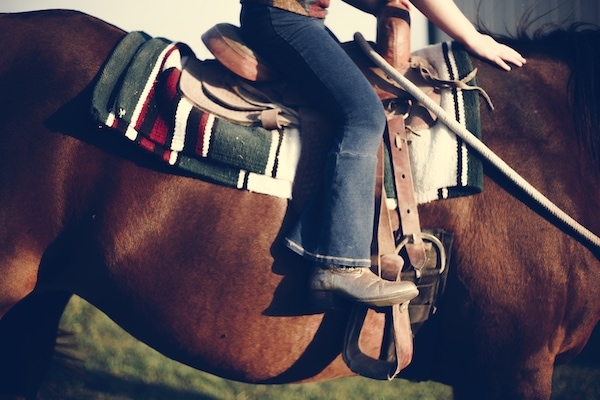
Horse riding and equine therapy provide a unique opportunity to develop both physical and emotional benefits to riders. Therapy teams consisting of the horse, rider, instructor, and typically – but not always – sidewalkers, work together to provide a fun and exciting environment for growth.
From grooming and tacking to taking on the arena atop a powerful animal, riders work to develop their physical and emotional skills throughout their time at the barn. Let’s look at the benefits of horse riding and equine therapy.
The Benefits of Equine-Assisted Activities
While riders focus on fun games or learning new horsemanship skills, they are also working on developing their physical strength. Motor skills, balance, and coordination are constantly exercised throughout activities due to the horse’s movement. The horse’s gait provides a similar rhythm and stride to a human stride. Equine-assisted physical therapy can include exercises to help with sitting, standing, and walking. Occupational therapy further improves fine motor, sensory, and attention skills.
When the rider connects with the horse,e it provides comfort and security for the rider. Being in control of such a large animal can give the rider confidence and self-esteem, which they may lack in other parts of their lives. Therapeutic riding also motivates the rider. Each session, they work on new skills and challenge themselves to get stronger and learn more horsemanship skills.
The Olympic events recognize Lis Hartel as an accomplished equestrian of her time. The horsewoman was diagnosed with polio at the young age of 23. Lis inspired many as she worked with her horse for three years to overcome her disability. Thanks to the therapeutic riding, Lis went on to compete in the 1952 and 1956 Olympics. Lis Hartel was the first woman to win a medal in an equestrian Olympic event.
Horse and Rider Connection
There is an outstanding and powerful emotional connection between humans and horses. Many riders experience this unique horse-rider connection, which provides long-lasting emotional benefits. Communication between horse and rider promotes physiological systems, including speech. Speech therapy can be used during therapeutic riding sessions in addition to physical therapy. Exercises used during speech therapy support speech and language development.
There are many cases of non-verbal children speaking their first words during equine-assisted activities and therapies. The unique connection between horse and rider prompts children to exercise their communication skills by using a horse’s name or a simple command. Horseback riding provides psychological, physical, and physiological benefits to the riders through equine bonding.
Local Therapeutic Horse Riding Resources
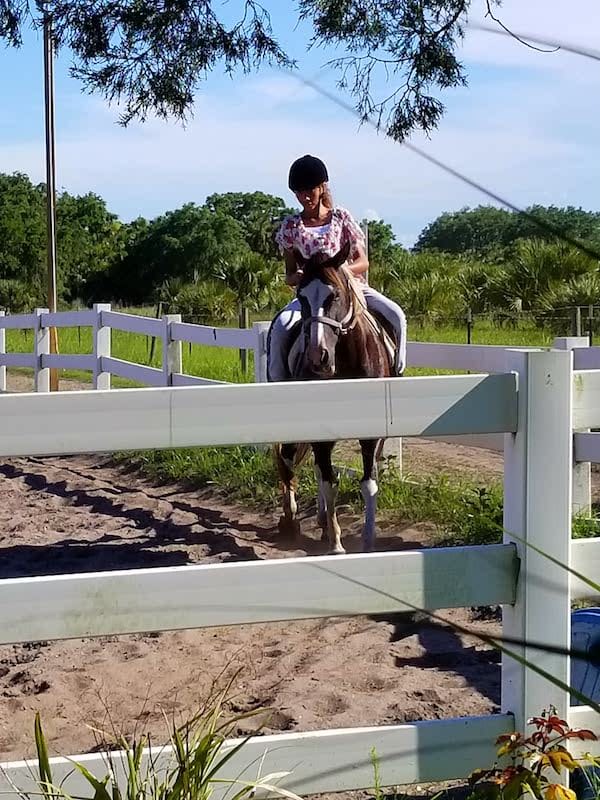 There are many local resources for horse adoption, horseback riding lessons, and therapeutic riding programs. One program that really stands out in the Brevard County area is HART (Hidden Acres Rescue for Thoroughbreds). HART is an organization that rescues, rehabilitates, and rehomes off-the-track Thoroughbreds, and works to retrains themino a safe, loving environment.
You can also contribute to HART by making a direct donation through their website below or volunteer your time. As a special needs mom myself, this organization is near & dear to my heart, as I watched my daughter gain skills, confidence, knowledge, and emotional skills with each lesson.
3330 Perkinson Ln, Merritt Island, FL 32953
2205 Pluckebaum Rd, Cocoa, FL 32926
You can easily support the wonderful animals and staff at these non-profits by volunteering or donating, helping these much-needed organizations survive and thrive in their mission to give horses and other farm animals a second chance at life.
All ages and skill sets welcome
Horseback riding may feel like an activity that is intimidating to get involved with if you are unfamiliar with horses. Still, there are many opportunities for riders and volunteers of all ages and skill levels. Volunteers can help with barn chores, horse care, or hands-on work directly with equine-assisted activities, and riders of all ages, from toddlers to adults, can begin participating in therapeutic riding programs.
There are even programs that benefit couples looking to strengthen their relationship through riding. Both riders and volunteers can grow their skill sets and bonds each time they visit the barn.
Equestrian-assisted programs provide a unique opportunity to build a connection with a team and an equestrian partner, creating long-lasting, fun memories while strengthening a wide range of physical and emotional skills.

Happy riding!

As an Amazon Associate, I earn from qualifying purchases. This small amount allows me to bring you helpful resources that I use or researched and recommend.
- Donating a Pacemaker to a Dog in Need: How Pet Lovers in Viera, Florida Can Make a Lasting Impact - August 17, 2026
- How to Prepare Your Pet for Fireworks: A Holiday Safety Checklist - June 22, 2026
- Spotlight On: Havanese - May 13, 2026

Recent Comments